“Neural Supernovae”- by Jeremy Reed
“Fanchon Fröhlich’s paintings are essentially neural, in that their explosive delivery of colour maps out work that takes its direction from inner landscapes given the form of abstract configuration. With a background in linguistic philosophy and science, Fanchon began painting at the Liverpool College of Art, largely as a figurative artist, before her seminal involvement with the etcher S.W. Hayter’s Atelier 17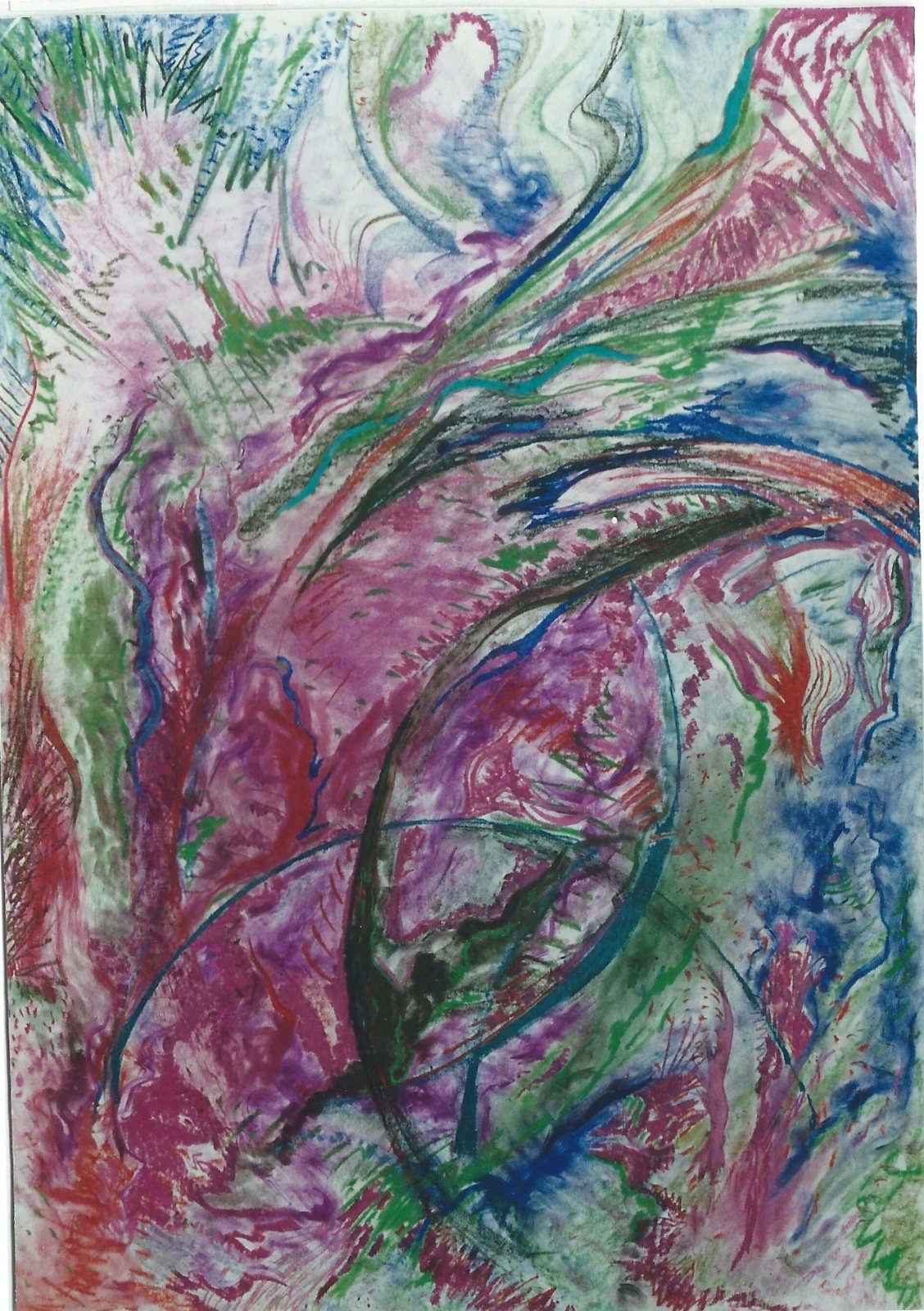
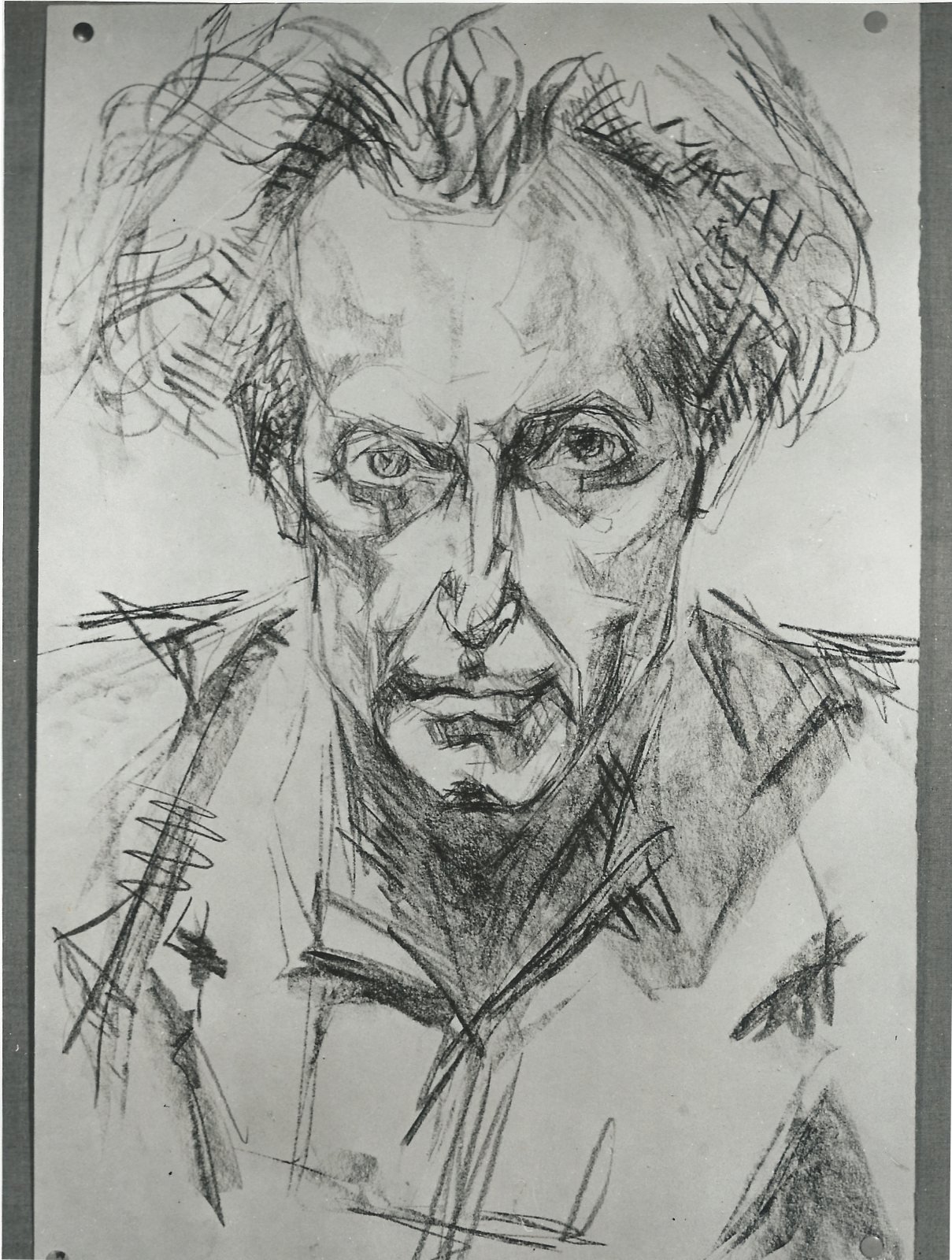
Only a small number of Fanchon’s early works have survived, but amongst them is the achingly sensitive portrait of her late husband, the physicist, Herbert Frohlich, shown here, as a superb example of her ability to bring the complex inner thinker to light, so that we the viewer are confronted directly with the man’s characteristic preoccupation with thought processes, as his means of connecting with the quantum universe by way of physics. Part of Fanchon’s greatness lies in her ability to continually reinvent herself as an artist. Her writings on philosophy, science and art, her immense European culture, that also takes in the work of the American abstract expressionists, as well as the Japanese influences on her art, initiated by a period of work with Goto San in Kyoto, have all combined over the years, to the continuous and lively remaking of her art as the dominant expression of a life committed to imaginative creativity.
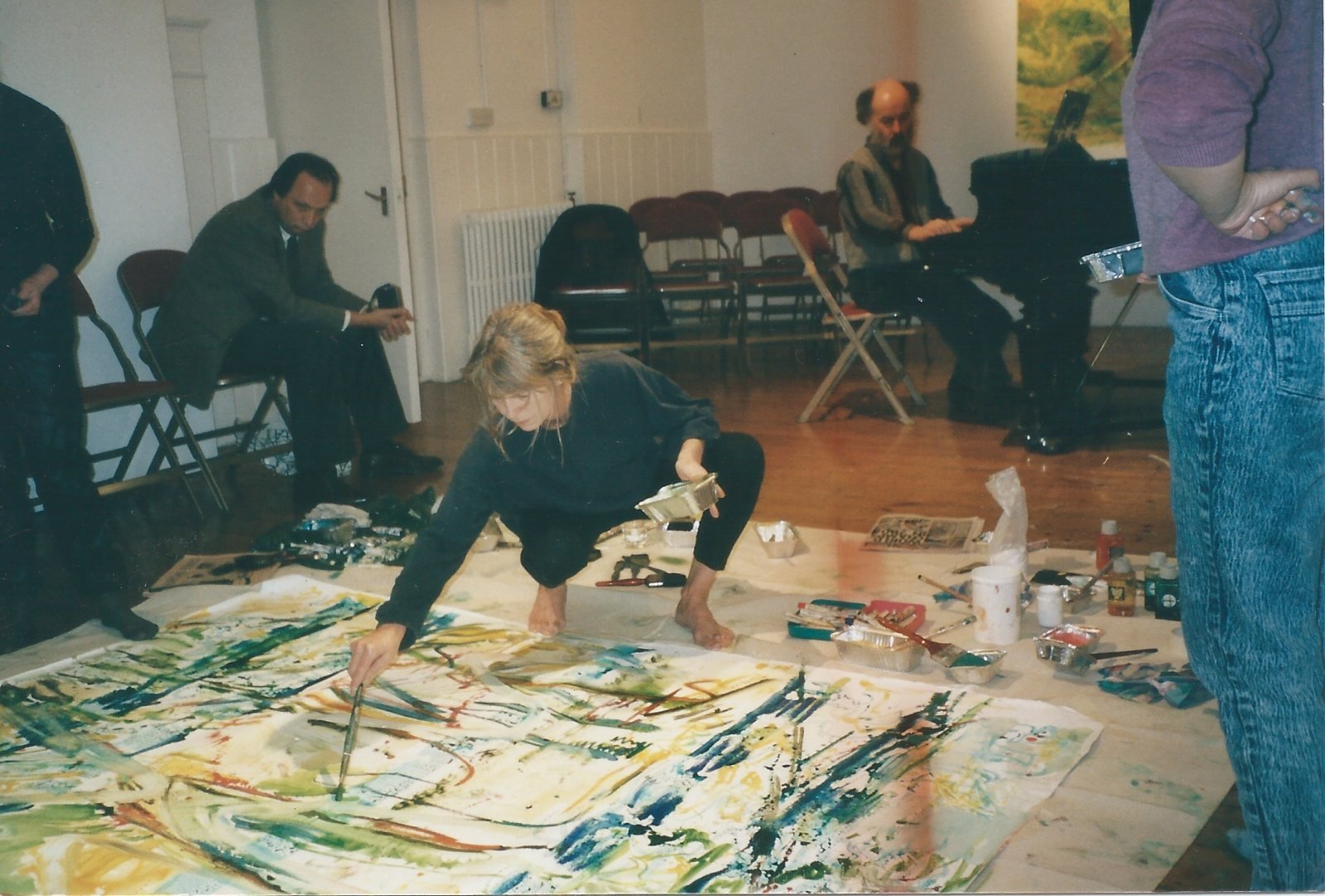
In 1991, Fanchon always in search of the new founded the Collective Phenomena, an art movement characterised by having several painters working abstractly together on a surface that takes its force from concentrated spontaneity within the participants, the activity often being performed live to the accompaniment of Lawrence Ball’s extempore piano music. The work of the Collective Phenomena, beautiful, disturbing, powerfully conflicting and neurologically menacing, is integral to the provocatively challenging retrospective of an artist at last coming up for serious consideration as a major painter. Fanchon’s connections to Liverpool too, as the concealed city buried in the subtext to her art, forms another important aspect of her creative growth as an artist, right from her early years of studying at the Liverpool College of Art, to assimilating the city’s indigenous culture into the textural density of her work as place, no matter how abstractly overwritten.
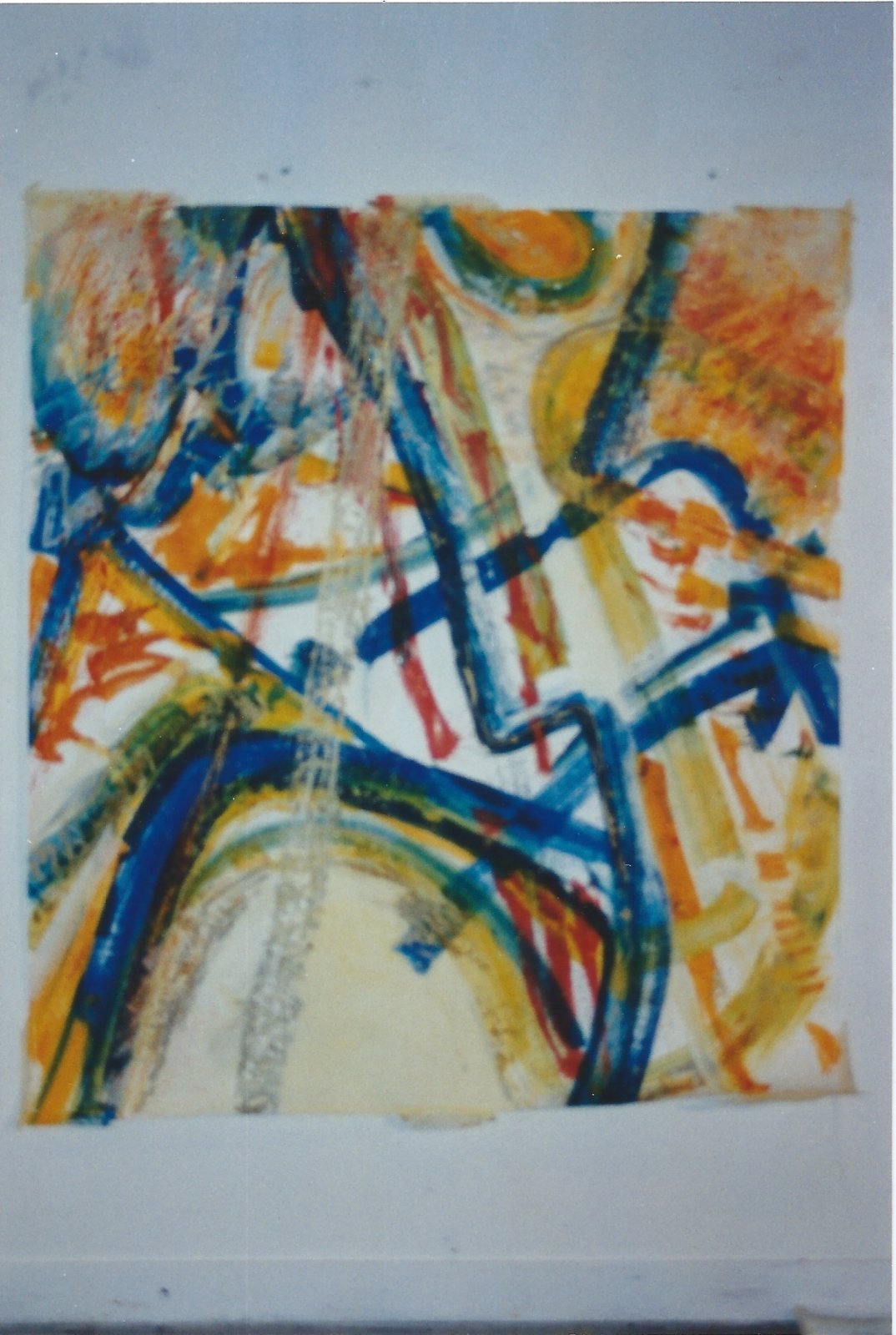
Almost entirely conceived in Liverpool, in a studio with aerospace-silver walls, high up in her old 19th century house on Greenheys Road, Fanchon Fröhlich who works in a light peculiar to her adopted city, has produced a highly original body of work, edgy, impacting, colourful, energised, and totally, unapologetically the real thing.”
Jeremy Reed, 2008